One of the most extensive resources on the internet
for the study of early Christianity
“Augustine - On Pelagianism”
From Augustine: De Haeresibus, 88
|
This site uses cookies. By continuing to browse the site you are agreeing to our use of cookies. Find out more about our use of cookies here. Click here to read at earlychurchtexts.com in the original Latin (with dictionary lookup links). The English translation below is from the Kidd, Documents Illustrative of the History of the Church, Vol. 2. earlychurchtexts.com
Try out the feature
rich subscription version of the Early Church Texts website for just $5
for a trial period or $30 for a year ($15 student rate). Click
here for more information. Check out the video demo of the site. Click here to go to the Early Church Texts Home Page
for the publicly available version of the site which has just the original Greek and Latin texts with dictionary lookup links. |
|
Relevant
books Many Augustine
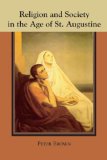
translations A selection below (Click on pictures or links.)Augustine Four Anti-Pelagian Writings (Fathers of the Church) -------------- Gerald Bonner See particularly chapters "Pelagianism and Augustine" "Augustine and Pelagianism" --------------
Peter Brown Religion and Society in the Age of St. Augustine See the
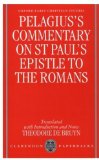
chapter --------------
Theodore De Bruyn -------------- J. Patout Burns The development of Augustine's doctrine of operative grace --------------
Robert Dodaro (See chapter See the chapter by James Wetzel: Snares of Truth: Augustine on Free will and Predestination.) -------------- John Ferguson Pelagius: A Historical and Theological Study --------------
B.R. Rees -------------- B.R. Rees --------------
James Wetzel -------------- Robert Van De Weyer The Letters of Pelagius (Early Christian Writings) --------------
Ed. R. Williams (See chapters by R. A. Markus, The Legacy of Pelagius; and L. Wickham, Pelagianism in the East.) |
The Pelagian heresy, at this present time the most
recent of all, owes its rise to the monk Pelagius. Caelestius followed him so
closely as his teacher, that their adherents are also called Caelestians. These
men are such opponents of the grace of God . . . that without it, as they
believe, man can do all the commandments of God. But, if this were true, God
would evidently have said in vain, “Without me, ye can do nothing.” After a
time, Pelagius was accused by the brethren of ascribing nothing to the grace of
God for the purpose of keeping His commandments. He admitted the charge so far
as, not indeed to put grace before free-will, but to supplant it by calculated
cunning, and to say that it was given to men in order that whey they are
commanded to do by their free-will they may the more easily be able to
accomplish with the help of grace. Of course, by saying “the more easily be
able” he wished it to be believed that, though with more difficulty, still men
are able without grace to do the commandments of God. That grace, however,
without which we cannot do anything that is good, they say consists simply in
free-will, which, without any preceding merits of ours, our nature received from
Him: God merely assisting us by His law and doctrine in order that we may learn
what to do and what we ought to hope for, not in order that, by the gift of His
Spirit, we may do what we have learned ought to be done. They confess in this
way there is given to us divine knowledge whereby ignorance is dispelled, but
they deny that love is given to us whereby we may lead a religious life: so that
whereas knowledge, which, without love puffeth up, is the gift of God, love
itself, which edifieth so that knowledge should not puff up, is not the gift of
God. They empty of their meaning the prayers which the Church makes: whether for
the unbelieving and those that refused the doctrine of God, that they may return
to God; or for the faithful, that faith may be increased in them and that they
may persevere therein. These things, they argue, a man does not receive from
God, but from himself; and they say that the grace of God, whereby we are
delivered from irreligion, is given us according to our merits. This [doctrine],
indeed, Pelagius, at his trial before the bishops in Palestine, when he was
afraid of being condemned, was forced to condemn; but, in his later writings, he
is found to teach it. They even go so far as to say that the life of the
righteous in this world has no sin, and thus the Church of Christ in this mortal
state is so perfected as to be altogether “without spot or wrinkle. ” As if it
were not the Church of Christ throughout the world which cries to God, “Forgive
us our trespasses.” They also deny that infants, born according to Adam after
the flesh, contract by their first [sc. Natural] birth the infection of the
ancient death. So they assert that they are born without any bond of original
sin: with the result, of course, that there is in them nothing that has to be
released at their Second [or New] Birth. The reason why they are baptized is
that by their New Birth they be adopted and admitted into the kingdom of God,
carried from good to better—not, by that renewal, delivered from any evil of
ancient entail. For even if they are not baptized, they promise them eternal
life and bliss of a sort, though not within the kingdom of God. Adam also
himself, they say, even if he had not sinned, would have undergone bodily death;
though, if he so died, it would have been due not to the deserts of his guilt,
but to the conditions of his nature. Several other things are charged against
them. But these are especially the points on which it may be understood how all,
or nearly all, the rest depend. |
Mac Users please note that the site may not work with Safari versions lower than version 4. (It has been tested with version 4.0.3.) It will work with Firefox, which can be downloaded from here.
Please note that for all features of the site to work correctly javascript must be enabled and the operation of "pop-up" windows must not be blocked. Click here for more information.
original Latin text
From Augustine: De Haeresibus, 88
On Heresies
Pelagius' views and doctrine
Pelagius and Pelagianism
Description and assessment of Pelagianism
Augustine debate with Pelagius
Migne Latin
Patrologiae Latinae Cursus Completus
Patrologia Latina