One of the most extensive resources on the internet
for the study of early Christianity
“Athanasius on The Atonement”
De Incarnatione Verbi, 7 -9
|
This site uses cookies. By continuing to browse the site you are agreeing to our use of cookies. Find out more about our use of cookies here. Click here to read at earlychurchtexts.com in the original Greek (with dictionary lookup links). The English translation below is from the NPNF series. earlychurchtexts.com
Try out the feature
rich subscription version of the Early Church Texts website for just $5
for a trial period or $30 for a year ($15 student rate). Click
here for more information. Check out the video demo of the site. Click here to go to the Early Church Texts Home Page
for the publicly available version of the site which has just the original Greek and Latin texts with dictionary lookup links. |
|
Relevant books available at Amazon Many Athanasius
studies -------------- STUDIES (Click on images below.)
Athanasius of Alexandria --------------
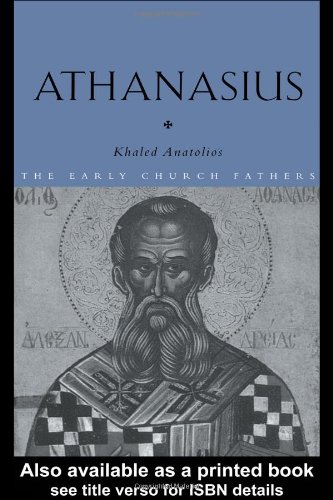
Athanasius --------------
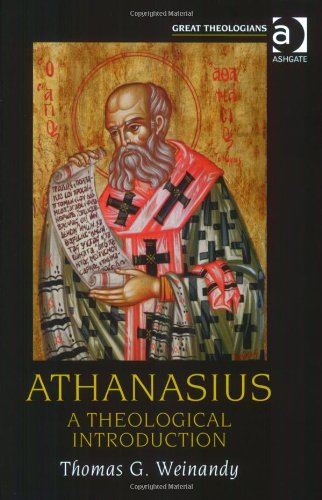
Athanasius: A Theological Introduction --------------
TRANSLATIONS
Athanasius --------------
On the Incarnation --------------
Works on the Spirit --------------
The Life of Antony and the Letter to Marcellinus --------------
|
7. But just as this consequence must needs hold, so, too, on the other side the just claims of God lie against it: that God should appear true to the law He had laid down concerning death. For it were monstrous for God, the Father of truth, to appear a liar for our profit and preservation. 2. So here, once more, what possible course was God to take? To demand repentance of men for their transgression? For this one might pronounce worthy of God; as though, just as from transgression men have become set towards corruption, so from repentance they may once more be set in the way of incorruption. 3. But repentance would, firstly, fail to guard the just claim of God. For He would still be none the more true, if men did not remain in the grasp of death; nor, secondly, does repentance call men back from what is their nature—it merely stays them from acts of sin. 4. Now, if there were merely a misdemeanour in question, and not a consequent corruption, repentance were well enough. But if, when transgression had once gained a start, men became involved in that corruption which was their nature, and were deprived of the grace which they had, being in the image of God, what further step was needed? or what was required for such grace and such recall, but the Word of God, which had also at the beginning made everything out of nought? 5. For His it was once more both to bring the corruptible to incorruption, and to maintain intact the just claim of the Father upon all. For being Word of the Father, and above all, He alone of natural fitness was both able to recreate everything, and worthy to suffer on behalf of all and to be ambassador for all with the Father.
|
Mac Users please note that the site may not work with Safari versions lower than version 4. (It has been tested with version 4.0.3.) It will work with Firefox, which can be downloaded from here.
Please note that for all features of the site to work correctly javascript must be enabled and the operation of "pop-up" windows must not be blocked. Click here for more information.
original Greek text
from De Incarnatione Verbi, 7-9
On the Incarnation of the Word
Athanasius reflects on the death of Christ and the atonement
Migne Greek
Patrologiae Graecae Cursus Completus
Patrologia Graeca